English
 Español

In modern laboratories and industrial facilities, effective drying is essential for maintaining sample quality, supporting research accuracy, and improving production efficiency. However, conventional hot air drying methods are not always suitable for materials that are sensitive to heat or oxidation.
A vacuum drying oven provides an alternative by reducing air pressure inside the chamber, allowing moisture and certain solvents to evaporate at lower temperatures. This makes vacuum drying particularly useful in pharmaceutical research, biotechnology, chemical processing, and material testing.
Unlike conventional drying ovens that use heated air circulation, a vacuum drying oven operates under reduced pressure.
Lowering the pressure reduces the boiling point of liquids, allowing moisture to evaporate at temperatures below those required under normal atmospheric conditions. This helps minimise thermal damage and reduces exposure to oxygen during the drying process.
Vacuum drying is particularly suitable for delicate powders, biological materials, chemical compounds, and other samples requiring controlled drying conditions.
1. Protects Heat-Sensitive Materials
One of the primary advantages of vacuum drying is the ability to remove moisture at lower temperatures. This helps reduce the risk of thermal degradation in temperature-sensitive samples.
2. Reduces Oxidation Risks
By removing much of the air from the chamber, vacuum drying limits oxygen exposure. This is beneficial when processing materials that may deteriorate through oxidation.
3. Supports Efficient Moisture Removal
Reduced pressure can accelerate evaporation under suitable conditions, making vacuum drying an effective option for certain powders, granules, and laboratory materials.
4. Improves Process Control
Modern laboratory vacuum drying ovens incorporate digital temperature controllers, timers, and safety features to support consistent operating conditions and reproducible drying procedures.
Vacuum drying equipment is widely used across industries requiring controlled moisture removal.
Pharmaceutical laboratories: Drying heat-sensitive compounds and preparing research samples.
Chemical laboratories: Removing moisture or suitable residual solvents from chemical materials.
Biotechnology research: Processing selected temperature-sensitive biological samples.
Materials testing: Drying powders, polymers, and other materials before further analysis.
Industrial research and development: Supporting experimental drying processes and quality-control procedures.
The suitability of vacuum drying depends on the sample composition, operating conditions, and equipment compatibility.
When selecting a vacuum drying oven, laboratories should consider several important factors.
Temperature Control: Choose equipment that supports the required operating temperatures and provides stable temperature regulation.
Chamber Capacity: Select a stainless steel cavity size appropriate for the quantity and dimensions of samples being processed.
Vacuum Performance: Consider the required vacuum level and compatibility with the laboratory's vacuum pump and process requirements.
Safety Features: Temperature alarms, durable chamber construction, and reliable door seals are important for safe and dependable operation.
Ease of Operation: Digital controllers and accessible chamber designs can simplify daily laboratory procedures.
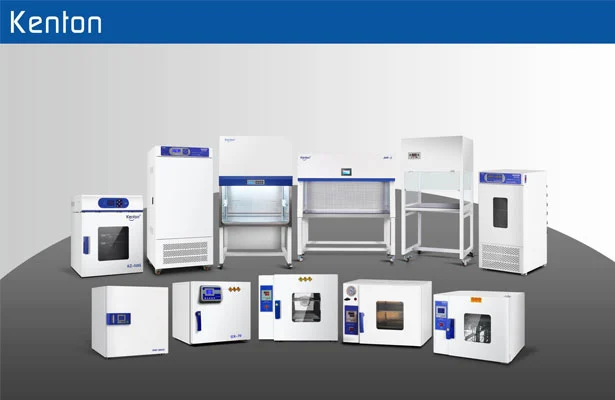
Kenton Apparatus offers vacuum drying equipment designed for laboratory research and industrial applications.
The DZF Vacuum Drying Oven features PID digital temperature control, timer functions, over-temperature alarms, and reinforced chamber construction. Its heating configurations support different laboratory requirements.
For applications requiring more advanced control, the KZ Lab Vacuum Drying Oven offers intelligent LCD temperature management and programmable control features, with additional data connectivity options depending on the configuration.
These product ranges provide different options for laboratories seeking precise temperature management and controlled drying performance.
Choosing the right vacuum drying oven can improve laboratory workflows, protect sensitive materials, and support reliable research results.
By considering temperature requirements, vacuum performance, chamber capacity, and control features, laboratories can identify equipment that best suits their applications.
Looking for a reliable laboratory vacuum drying oven?
Explore the vacuum drying equipment available from Kenton Apparatus or contact our team to discuss your laboratory requirements and request product information.